Which one you first choose? በቅድሚያ የሚፈልጉት

Showing posts with label #BBC. Show all posts

Saturday, November 25, 2017

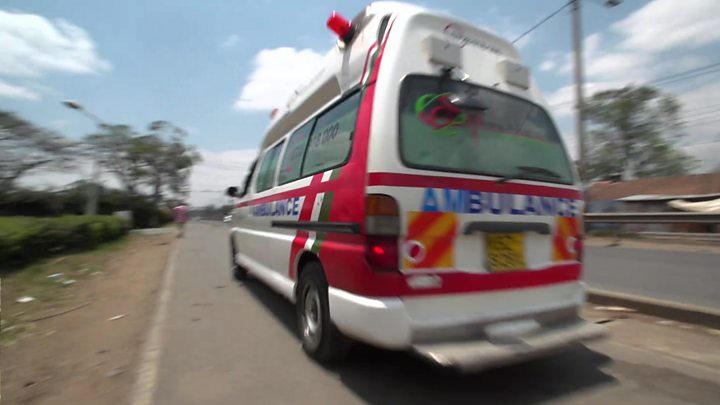
How a speedy emergency services app is saving lives


Media captionHow an emergency services app is helping to save lives
Many of us assume that if you call an emergency number like 911, 999 or 112, someone will answer quickly and help will arrive soon wherever we are in the world.
But across Africa, this isn't always the case.
In Kenya's capital Nairobi, for example, there are more than 50 different numbers for emergency services. Ringing round trying to find an available crew can be a lengthy - and potentially life-jeopardising - process.
You can wait two or three hours for an ambulance to arrive.
"You just take for granted that 911 [the US emergency services number] exists, and we did as well," says Caitlin Dolkart.
She and her business partner Maria Rabinovich had both been working in the health industry in Nairobi for years before starting their company Flare.
"We thought - what would we do in an emergency? So we started asking people to spot ambulances and realised there were so many around and no one has any idea where they are," says Ms Dolkart.
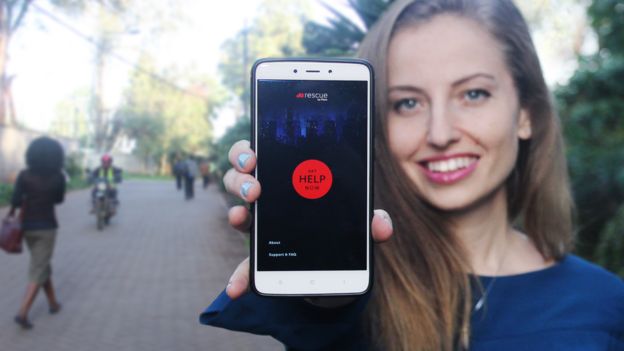
Flare co-founder Maria Rabinovich
Image captionFlare co-founder Maria Rabinovich wants to improve emergency service response times
The pair created an Uber-style online platform that aims to connect people to the closest emergency responders.
Private ambulance crews log in to the system at the start of a shift. Their locations can then be tracked and monitored by any hospital registered to Flare.
"Within the system we have different ambulance companies, so depending on the resources we work together," says Patrick Kinyenje, who works as emergency co-ordinator or dispatcher at Care Hospital in Nairobi.
Flare aggregates all the available ambulances on a map so dispatchers like Patrick can choose the most appropriate vehicle based on where it is, the expertise of the crew, and the equipment on board.
It also incorporates Google maps traffic data to help emergency workers navigate the city's notorious traffic jams.
"The response time that we have seen has gone down from 162 minutes, which is the average, to about 15 to 20 minutes," says Ms Dolkart.
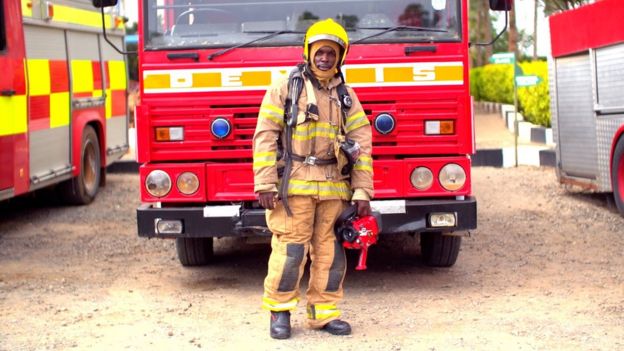
Kenyan firefighter in front of fire engine
Image captionFirefighters in Nairobi often have to tackle major traffic jams before tackling major fires
Hospitals pay a subscription fee to access the service whilst individuals in the capital can sign up for membership, with levels of cover starting from around $15 a year.
The website promises access to a 24/7 hotline of emergency professionals.
"The membership product is like your emergency and healthcare concierge," says Ms Rabinovich.
The service is similar to ones run by Red Cross Kenya, Amber Health in India and Murgency in Dubai.
But will this business model really work in a country where $15 is three months salary for many people?
Dr Stellah Bosire-Otieno of the Kenya Medical Association has her doubts.
"By principle it's an excellent idea. But the target population that can afford it are the middle income earners who most likely have health insurance.
"Those in the low social economic regions wouldn't be able to afford this," she says.
In 2013, the government re-introduced a 999 emergency hotline number for the capital but it was inundated with prank calls and is now rarely answered.
During the recent election violence, the BBC rang the number a few times but didn't get through. On one occasion, someone did pick up the phone, though hung up immediately.
"To be honest it rarely works," explains Bethuel Aliwa, who runs ICT Fire and Rescue, a training school and Fire service.
"Also, the technology of 999 has not changed, people have moved to mobile phone, but I believe 999 is still on analogue, so it is quite a problem," says Mr Aliwa.
A 999 call goes direct to the police who then start looking for the nearest ambulance or fire engine. But there are dozens of numbers for the various emergency services, and often phone numbers belong to individuals rather than agencies.
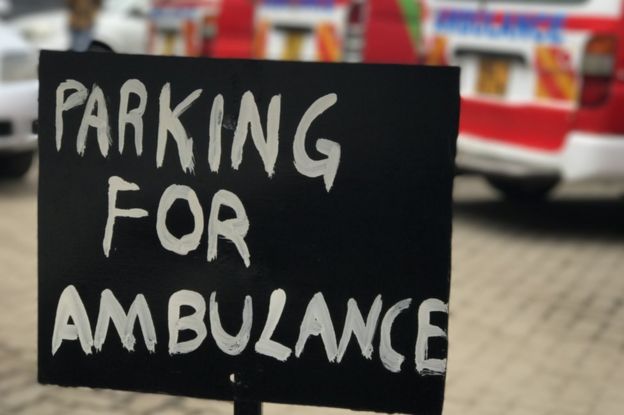
Ambulance car parking sign
Image captionThere are many different ambulance services competing for business
"By the time a fire service arrives, it's often too late," says Mr Aliwa.
Flare is now working on aggregating private fire agencies onto the system.
Due to the nature of Nairobi's roads and the constant traffic jams, the crew at ICT have found that sending smaller fire trucks works better. The downside is they can carry less water.
In addition, being a private agency, the places they can get water from are limited.

More Technology of Business

Technology logoImage copyrightGETTY IMAGES
"Within five minutes the water is done, we need to rush to the nearest hydrant. You are gambling, you know, today you'll either get water or not," says Mr Aliwa.
To solve this issue, Flare is mapping all the available water hydrants in the city and recording them on the platform. So in addition to available fire trucks, dispatchers can also identify the closest water points.
"When we first started to do the research on fire in Nairobi, we found there are up to 4,000 fire hydrants that are potentially working," explains Ms Rabinovich.
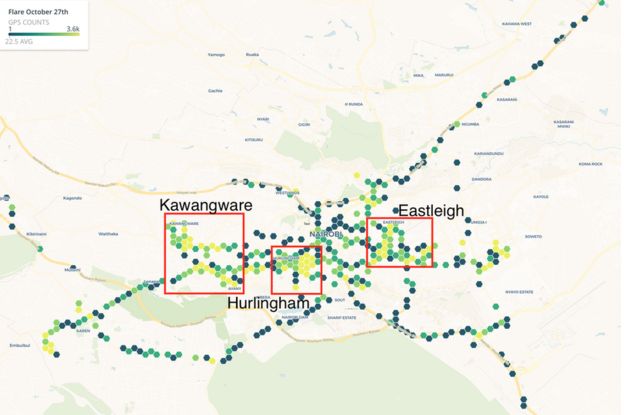
Map of GPS movements of ambulancesImage copyrightFLARE
Image captionDuring the Kenyan elections in October, Flare recorded a 33% increase in ambulance movements
"But a lot of them are not in service. There are about eight that the firefighters currently use and know about, so there is a huge potential to improve fire response."
Flare is currently working with the private sector with the intention of adding more "concierge-style" features for members, such as real-time updates and treatment information.
The start-up is also collecting some interesting data.
"We learned there is a lack of ambulances between 7am and 9am because of shift handovers," explains Ms Dolkart.
"We're trying to encourage operators to stagger shift changes and make sure there is always an ambulance available," she says.
Flare hopes the information they are collecting for both the fire and ambulance service will prove useful in coordinating better services across the city.

Friday, November 24, 2017

Zimbabwe got new President after Robert Mugabe thrown out to rest


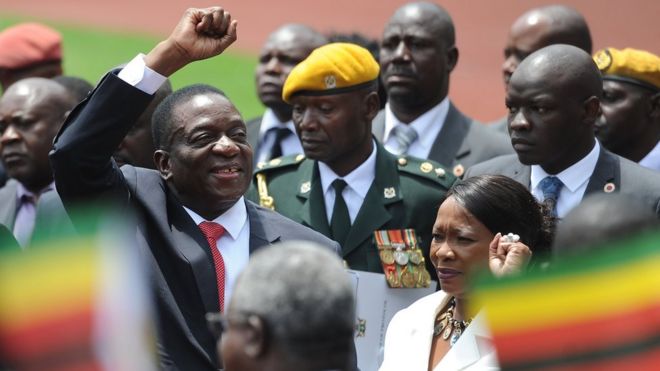
Emmerson and Auxilia MnangagwaImage copyrightEPA
Image captionMr Mnangagwa is sworn is as Zimbabwe's new president

Zimbabwe's new President Emmerson Mnangagwa has addressed a packed stadium, vowing to serve all citizens.
He said he felt "deeply humbled" to take the role.
And he said he was "not oblivious to the many Zimbabweans from across the political and racial divide who have helped make this day."
He paid tribute to his predecessor Robert Mugabe - to muted applause - calling him "a father, mentor, comrade-in-arms and my leader".
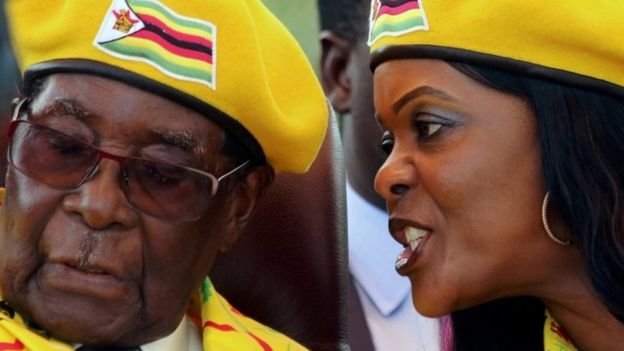
Mr Mugabe left office dramatically this week after 37 years of authoritarian rule. His departure followed a power struggle in which Mr Mnangagwa was sacked as vice president to pave the way for Grace Mugabe, the then-first lady, to take up the presidency.
Mr Mnangagwa fled the country but returned to a hero's welcome and on Friday struck a conciliatory tone.
"The task at hand is that of rebuilding our country," he said.
"I am required to serve our country as the president of all citizens regardless of colour, creed, religion, tribe, totem or political affiliation."
Although Mr Mnangagwa has unseated Zimbabwe's long-time ruler, he is still associated by many with some of the worst atrocities committed under the ruling Zanu-PF party since the country gained independence in 1980.


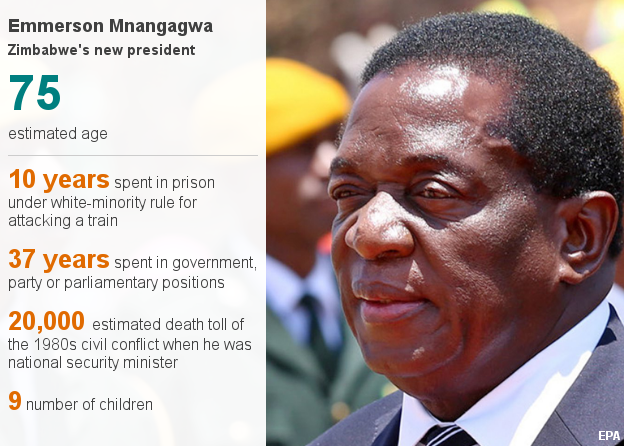
Emmerson Mnangagwa in numbers

He was the country's spymaster during the 1980s civil conflict, in which thousands of civilians were killed. But he has denied any role in the massacres, blaming the army.

How did the inauguration unfold?

Tens of thousands of people packed the National Sports Stadium in Zimbabwe's capital, Harare, to witness the inauguration. Pop singer Jah Prayzer provided the entertainment and, as people in the crowd danced, the atmosphere was closer to that of a concert.
Dignitaries, including leaders from various African countries, filed in to cheers.
Opposition leaders Morgan Tsvangirai and Joice Mujuru - who both had their sights on the presidency at various times - were there.
Mr Mnangagwa was led in the oath of office by Chief Justice Luke Malaba, saying he would "be faithful to Zimbabwe", "protect and promote the rights and people of Zimbabwe" and discharge his duties to the best of his abilities.
Mr Mnangagwa was accompanied by his wife Auxilia and gave her a kiss after the green presidential sash was placed around his neck.

Was Mr Mugabe there?

No - and the official reason given was that at 93, the former president needed to rest.
But the fact he is not attending is a reminder that this is no ordinary transition, the BBC's Andrew Harding reports, and that despite Mr Mugabe's official resignation he was forced out by the military.
On Thursday, several reports suggested Mr Mugabe had been granted immunity from prosecution.


Robert Mugabe and his wife Grace. Photo: 8 November 2017Image copyrightREUTERS
Image captionPresident Mugabe was accused of preparing the presidency for his wife Grace

Local media are reporting that Mr Mnangagwa has offered the Mugabe family "maximum security and welfare".
The former president "expressed his good wishes and support for the incoming president," the Herald newspaper reports.

How did Zimbabwe get to this point?

The news on Tuesday that Mr Mugabe was stepping down sparked wild celebrations.
It came in the form of a letter read out in parliament, abruptly halting impeachment proceedings against him.
He had been under pressure since the military took control of the country a week before, seizing the headquarters of the national broadcaster.
Although Mr Mugabe was largely under house arrest for several days, he appeared to be resisting pressure to stand down.
On Saturday, tens of thousands of Zimbabweans took to the streets of Harare to urge him to go. The demonstration was led by veterans of the country's war of independence, who last year turned against him.


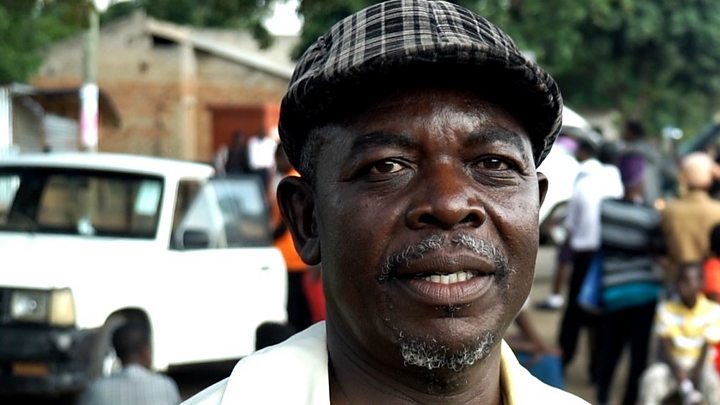
Media captionA pensioner, an activist and a white farmer share hopes for Zimbabwe's future

On Sunday, Zanu-PF sacked Mr Mugabe as its leader. Two days later, he resigned as president.
In his letter, he said he was resigning to allow a smooth and peaceful transfer of power, and that his decision was voluntary.

Will the change be good for the economy?

Zimbabwe's economy is in a very bad state. It has not recovered fully from crises in the last decade, when rampant inflation grew so bad the country had to abandon its own currency. Now, according to some estimates, 90% of people there are unemployed.
Its main industrial index has slumped by 40% since last week's military intervention and the stock market has shed $6bn (£4.5bn) in a week.
Analysts say the market is now correcting itself, optimistic of a change of economic policy under Mr Mnangagwa.
In his speech, Mr Mnangagwa said he would base a new economic policy on agriculture and foreign direct investment. He has pledged to create jobs.
He also said the country's land reform programme would not be reversed, but pledged to compensate farmers for the land that was confiscated from them.
The seizure of land from white farmers is seen as a key factor in the country's economic meltdown.

What comes next?

On Thursday, Zimbabwe's main opposition MDC party called for deep-rooted political reform to dismantle the repressive apparatus that sustained Mr Mugabe's regime.


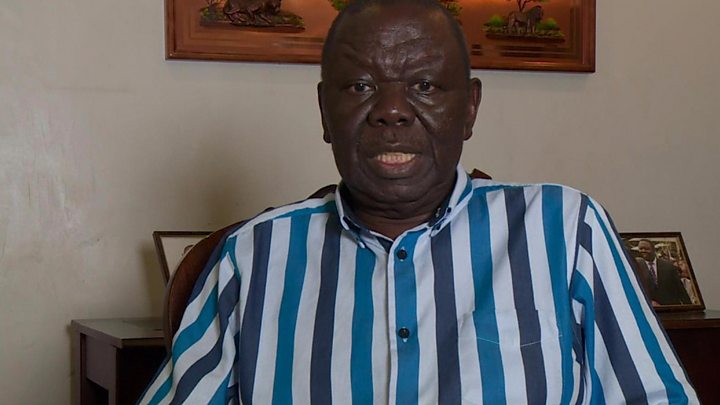
Media captionLeader of the opposition MDC party, Morgan Tsvangirai, warns of a "power retention agenda"

MDC leader Morgan Tsvangirai said the "culture of violence" and "culture of corruption" had to be changed after "after so many years of Zanu-PF misrule".
It is unclear whether Zanu-PF will govern alone ahead of scheduled elections next year, or whether a coalition government of national unity that includes opposition groups will be formed.
Mr Mnangagwa confirmed in his speech that elections would be held as planned.
#BBC

Monday, March 13, 2017

Facebook's Mark Zuckerberg due in court over VR theft

Mark Zuckerberg has shown great enthusiasm for VR since his firm took over OculusImage copyrightGETTY IMAGES
Image captionThe Facebook founder has shown great enthusiasm for VR since his firm took over Oculus
Mark Zuckerberg is expected to appear in a Dallas court on Tuesday to defend his company over claims it stole virtual reality technology.
Zenimax Media, owner of renowned games studio id Software, is suing Facebook for $2bn (£1.6bn).
Zenimax argued its early innovations in VR were unlawfully copied when Oculus built its own headset, the Rift.
Oculus was bought by Facebook in 2014, and is seen as a major part of the firm’s strategy over the next 10 years.
The BBC understands Mr Zuckerberg will argue that Zenimax was slow to appreciate the potential of VR - and that it was Oculus’ own work that made it the valuable technology it is today."We're eager to present our case in court,” a spokesman for Oculus told the BBC.
"Oculus and its founders have invested a wealth of time and money in VR because we believe it can fundamentally transform the way people interact and communicate.
"We're disappointed that another company is using wasteful litigation to attempt to take credit for technology that it did not have the vision, expertise, or patience to build.”
Carmack
The row revolves around John Carmack, the legendary games designer famed for titles such as Doom and Quake. The company he co-founded, id Software, is owned by Zenimax.
For a short time, Mr Carmack was working for both id and Oculus - but in November 2013 he left id completely.
John Carmack is accused of taking intellectual property with him after he left iD SoftwareImage copyrightGETTY IMAGES
Image captionJohn Carmack is accused of taking intellectual property with him after he left id Software
"When it became clear that I wasn't going to have the opportunity to do any work on VR while at id Software, I decided to not renew my contract,” he told USA Today in 2014.
Zenimax now alleges that Mr Carmack shared intellectual property with Oculus while he was still working at id Software, and that when he left the company, he took that work with him.
According to court papers: "Carmack secretly and illegally copied thousands of documents containing ZeniMax's intellectual property from his computer at ZeniMax to a USB storage device which he wrongfully took with him to Oculus."
Speaking at the trial, which began last week, Zenimax lawyer Tony Sammi said it amounted to "one of the biggest technology heists ever”.
But lawyers for Mr Carmack characterised it differently, arguing that his contract explicitly allowed him to work with other companies that did not compete with Zenimax.
They argued that the "trade secrets" Zenimax claimed to have lost were in fact "the fruits of Mr. Carmack's participation and involvement with Palmer Luckey and Oculus", and therefore did not belong to Zenimax.
Missed the boat
Facebook’s defence is that Zenimax had its chance to invest in VR but chose not to - giving Oculus no option other than to seek outside investment.
The social media giant is arguing that Zenimax only showed significant interest in virtual reality after its $2bn acquisition was made public.
Oculus co-founder Palmer Luckey has not appeared in public since revelations he was funding a pro-Trump online campaignImage copyrightGETTY IMAGES
Image captionOculus co-founder Palmer Luckey has not appeared in public since revelations he was funding a pro-Trump online campaign
Also crucial to the case is Palmer Luckey. Mr Luckey - who hasn’t been seen in public since revelations he was funding an online trolling campaign in support of Donald Trump - is expected to be called to the stand at some point this week.
In court papers Zenimax paints Mr Luckey as a “gaming enthusiast” whose Oculus Rift headset, which was initially funded via Kickstarter, was a crude prototype.
Mr Luckey, Zenimax said, lacked "the necessary expertise and technical know-how to create a viable virtual reality headset”, and therefore relied on Zenimax to help him create the prototype which impressed Facebook.
Mark Zuckerberg’s appearance is expected to last most of the day on Tuesday.
On Monday, the 32-year-old posted about meeting with local communities and law enforcement groups in Dallas as part of his new year pledge to travel to 30 different US states in 2017.
Follow Dave Lee on Twitter @DaveLeeBBC and on Facebook

wanted officials